
In the Year of the Horse, therapy, traditions, and a little magic converge
For the Chinese New Year, a columnist reflects on his family's journey
Written by |





For our family, the Chinese New Year has always been more than just a date on the calendar. It’s a reminder for us to pause, reflect, clear out the clutter — both literal and emotional — and move forward with hope.
My wife, Judy, is from Taiwan, so these traditions are deeply rooted in her childhood. She often shares memories of family gatherings, bustling markets, and the excitement of a fresh start each year.
When our daughter, Rylae-Ann, was born, we feared those traditions might fade after receiving the devastating news of her aromatic l-amino acid decarboxylase (AADC) deficiency diagnosis. At the time, the future felt uncertain, and celebrations distant.
Over the years, however, those traditions have slowly returned to our lives. They might look different from what we once imagined, but they are just as meaningful. As we prepare for the Chinese New Year next week, it feels especially fitting to welcome the Year of the Horse, a zodiac sign that symbolizes strength, endurance, independence, and steady movement forward.

Getting creative with traditions
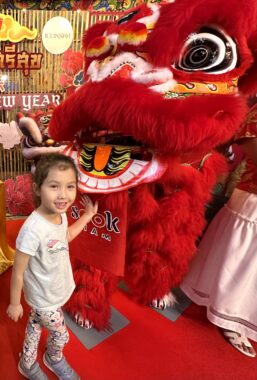
Rylae-Ann poses with a lion after a Chinese New Year dance. (Photo by Richard E. Poulin III)
For Judy, one of the most meaningful aspects of the Chinese New Year is how it connects generations. She says that in Taiwan, preparations for the event were never rushed. Cleaning the house, helping in the kitchen, and decorating weren’t viewed as chores, but rather shared experiences filled with conversation, laughter, and purpose. Bringing those traditions into our home today is our way of honoring that legacy while creating new memories for Rylae-Ann that she can carry forward in her own way.
Like many families, our preparations begin well before the celebration. There is cleaning to sweep away bad luck, decorating with red for prosperity, and planning meals that symbolize abundance and longevity. For us, these traditions also serve another purpose: They create natural opportunities to work toward therapy goals that don’t feel like therapy at all.
Cleaning day, for example, becomes a family effort. Because Rylae-Ann has AADC deficiency, simple tasks like carrying lightweight items, sorting decorations, wiping surfaces, and putting things away support balance, coordination, sequencing, and independence. They aren’t exercises; she’s helping her family. The pride she feels in contributing is just as important as the physical gains.
Decorating is another favorite. Hanging red lanterns and paper cuttings turns into a playful challenge that supports hand-eye coordination, bilateral movement, and spatial awareness. Some decorations hang a little crooked, but that only adds character. When Rylae-Ann steps back and proudly points to something she helped hang, it’s a reminder that progress often looks like confidence, not perfection.
Food preparation is where tradition, therapy, and joy truly come together. Chinese New Year dishes are rich in symbolism. Dumplings represent wealth, fish symbolizes abundance, and noodles stand for long life. Our kitchen becomes a space for learning and connection. Rolling dough, pinching dumplings, stirring fillings, and washing vegetables all support fine motor skills, sensory exploration, and following multistep directions. Judy has a natural gift for turning these moments into gentle learning opportunities, while I focus on keeping things light when dumplings inevitably fall apart.
The Year of the Horse holds special meaning for us. In addition to what I mentioned above, it represents steady progress, resilience, and a determination to keep moving, even when the path is long. It’s hard not to see parallels with Rylae-Ann’s journey. Born with a rare neurological condition and treated with gene therapy at just 18 months old, she has faced challenges that require patience and perseverance.
Her progress hasn’t been sudden or effortless. It’s been built step by step, through consistency, determination, and showing up every day. These are all very horse-like qualities, if you ask me.
As we welcome the Year of the Horse, we do so with gratitude for how far we have come and hope for the road ahead. The Chinese New Year reminds us that growth doesn’t always come from structured plans or perfect outcomes. Sometimes it comes from moving forward one step at a time, decorating together, making imperfect dumplings, and choosing to celebrate progress.
In a home filled with red decorations, shared laughter, and steady forward motion, that feels like the perfect way to start a new year.
Note: AADC News is strictly a news and information website about the disease. It does not provide medical advice, diagnosis, or treatment. This content is not intended to be a substitute for professional medical advice, diagnosis, or treatment. Always seek the advice of your physician or other qualified health provider with any questions you may have regarding a medical condition. Never disregard professional medical advice or delay in seeking it because of something you have read on this website. The opinions expressed in this column are not those of AADC News or its parent company, Bionews, and are intended to spark discussion about issues pertaining to aromatic l-amino acid decarboxylase deficiency.

Leave a comment
Fill in the required fields to post. Your email address will not be published.