
When a Halloween costume offers an important lesson on inclusion
The goal isn't to make every child the same, but to ensure every child can belong
Written by |





On Halloween, our daughter, Rylae-Ann, joined approximately 200 children for a school parade and carnival. Costumes, laughter, excitement, and the unmistakable sound of hundreds of children having fun filled the campus.
For most families, this might seem like another fun school event. For us, it represented something much bigger.
It was a celebration of inclusion, belonging, and the simple joy of being part of something.
After spending time homeschooling Rylae-Ann, my wife, Judy, and I have gained a deeper appreciation for the benefits of both homeschooling and mainstream education. As educators, we understand that learning extends far beyond textbooks, academic standards, and test scores.
Sometimes, the most important lessons happen while wearing a Halloween costume!

The benefits of homeschooling
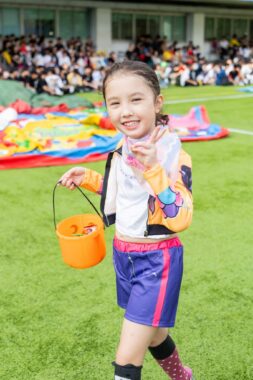
Rylae-Ann shows off her Halloween costume during a school parade. (Photo by Richard E. Poulin III)
When we decided to homeschool Rylae-Ann, who lives with aromatic l-amino acid decarboxylase (AADC) deficiency, we discovered tremendous benefits.
We could personalize her learning, accommodate therapy schedules, and provide individualized instruction. We could slow down when she struggled and accelerate when she demonstrated understanding.
More importantly, we could build confidence in a safe, supportive environment.
However, even with our educational backgrounds and creativity, there were experiences we simply couldn’t replicate.
For example, organizing a Halloween celebration with 200 excited children!
I have organized plenty of school events as a principal, but convincing 200 children to show up at our house for a parade might be pushing my abilities.
And I suspect Judy would have something to say about the cleanup!
Learning through belonging
Returning to mainstream school has opened another important chapter in Rylae-Ann’s development.
Academically, she continues to grow, particularly in reading. Physically, she still faces challenges with movement, coordination, and keeping pace with classmates.
Socially, she is still learning how to develop and maintain friendships. This is where inclusion becomes especially important.
Friendships rarely develop through formal lessons. They grow through shared experiences, spontaneous conversations, laughter, and simply spending time together.
A Halloween parade provides an opportunity to admire costumes, laugh with classmates, participate in activities, and create shared memories.
These interactions may seem small, but for a child still developing social confidence, they are invaluable.
Perhaps a classmate remembers her costume. Maybe a shared laugh becomes a conversation the following week. Over time, those small connections can develop into meaningful friendships.
Friendships don’t always begin with a grand introduction. Sometimes they begin because two children experienced something wonderful together.
Inclusion requires more than attendance
As a special educator and former school principal, I have always advocated for inclusive education. However, being the parent of a child with a rare neurological disorder has given that philosophy a much more personal meaning. Simply placing a child with disabilities in a mainstream classroom does not automatically create inclusion.
True inclusion happens when children are welcomed, supported, and given meaningful opportunities to participate.
It means recognizing that every child brings different abilities, strengths, and challenges. It means adapting activities when necessary rather than expecting every child to participate in exactly the same way.
It also benefits children without disabilities. When classmates celebrate, learn, and play alongside children with different abilities, they develop empathy, patience, and an appreciation for diversity. These lessons cannot always be measured on standardized assessments, but they help shape compassionate future citizens.
Celebrating every kind of milestone
Our rare disease journey has taught us to celebrate milestones that other families might take for granted.
We celebrated when Rylae-Ann first sat independently, crawled, stood, and eventually walked following gene therapy.
Today, we celebrate different milestones. Attending school. Participating in a parade. Joining a carnival. Building friendships.
Homeschooling gave Rylae-Ann valuable opportunities to strengthen her academic skills and independence. Returning to mainstream school is giving her opportunities to apply those skills within a larger community.
Neither approach is perfect for every child or every stage of development. What matters is finding an environment where a child can learn, participate, and thrive.
Watching Rylae-Ann take part in the Halloween festivities reminded me that inclusion isn’t about making every child the same. It’s about ensuring every child has the opportunity to belong.
The Halloween decorations will eventually disappear, but hopefully the connections formed during these celebrations will continue to grow. And if those friendships last longer than the Halloween candy in our house, I will consider that a tremendous success!
Note: AADC News is strictly a news and information website about the disease. It does not provide medical advice, diagnosis, or treatment. This content is not intended to be a substitute for professional medical advice, diagnosis, or treatment. Always seek the advice of your physician or other qualified health provider with any questions you may have regarding a medical condition. Never disregard professional medical advice or delay in seeking it because of something you have read on this website. The opinions expressed in this column are not those of AADC News or its parent company, Bionews, and are intended to spark discussion about issues pertaining to aromatic l-amino acid decarboxylase deficiency.

Leave a comment
Fill in the required fields to post. Your email address will not be published.