
The coaches who helped my daughter find her confidence
Rylae-Ann's growth is a victory worth remembering
Written by |





Sports has never been my daughter Rylae-Ann’s strongest subject. After having gene therapy seven years ago to treat her aromatic l-amino acid decarboxylase (AADC) deficiency, she made progress we once could have only imagined. She learned to walk, run, swim, and join her classmates at school. She is still building strength and coordination, though, and a long morning of outdoor activity can tire her quickly. So when Sports Day arrived, we knew it might be a challenge.
Thanks to her teachers and the school community, Rylae-Ann was able to take part. As I watched her join the activities, I saw more than physical effort. I saw confidence. I saw grit. I saw a girl who was willing to try, even when she knew an activity might be hard.
That moment brought me back to the importance of coaches.

Coaches preparing me
Parents naturally focus on reading, math, and science. Physical education (PE) can sometimes be treated as an afterthought, something to fit in after the “important” subjects. But a great PE teacher or coach can help children build skills that are difficult to develop in a classroom: persistence, teamwork, self-belief, and the courage to try again.
I know this because of my own wrestling coach, Coach P. In my memoir, “Reawaken,” I write about how he changed the direction of my life in high school. He was demanding, disciplined, and deeply caring. One lesson stayed with me long after wrestling: “You will never remember the hard work, pain, or sweat you put in, but you will always remember the glory of victory.”
Rylae-Ann’s coaches
I did not know then how much those lessons would matter later, when Judy and I learned that Rylae-Ann had AADC deficiency. The discipline and resilience I learned through wrestling helped me face uncertainty and keep moving forward. Today, coaches are helping my daughter build her own strength and confidence.
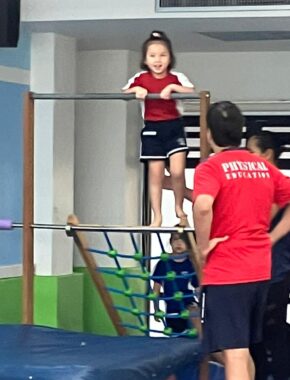
Coach Mark watches on as Rylae-Ann completes gymnastics activities. (Courtesy of Richard E. Poulin III)
Coach Mark was one of Rylae-Ann’s first PE coaches. She had only recently learned to walk. With his encouragement and expertise, she began learning new skills and trusting what her body could do. Those early experiences helped build the confidence that supported her progress. Her story of learning to move forward, one small step at a time, is part of what I shared in my reflections on what I wish I could have told myself before her gene therapy.
Coach Matt introduced Rylae-Ann to swimming. Today, she is independent in the water and often pleads for more time in the pool. He also helped her build friendships and feel included with children her age. Swimming became more than a physical activity. It gave her a place to belong and enjoy herself. I wrote about that journey in “Our little ‘mermaid-in-training’ ventures back into the water.”
Coach Sean knows how to bring out Rylae-Ann’s determination when she thinks she can’t do something. He also knows when she needs emotional support. From fist bumps to Care Bear, he has become the kind of big brother any child would be lucky to have.
Coach G., her current PE teacher, continues to give her opportunities to learn, build stamina, and collaborate with classmates. Rylae-Ann may not describe those as learning goals. She just squeals with excitement when she puts on her PE uniform because she knows it is a day she gets to go to class.
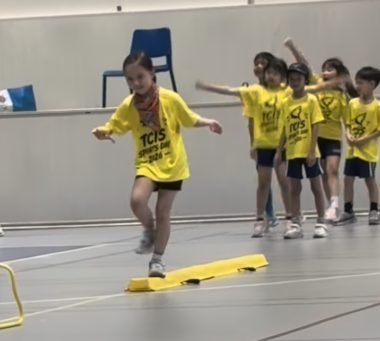
Rylae-Ann continues to build confidence and skills, thanks to her passionate coaches and inclusive school community. (Photo by Richard E. Poulin III)
Recently, Coach Wade met her and learned her story. With the elementary school community watching, he encouraged her to try the obstacle course. As he cheered her on, the crowd joined in, chanting her name. That moment showed inclusion come alive and what can happen when a coach believes in a child and a community follows their lead.
These coaches are doing more than teaching sports. They are helping Rylae-Ann discover what she can do, practice working with others, and feel that she belongs. As I’ve written before, support and independence can grow together. A coach can offer just enough guidance to help a child take the next step.
Rylae-Ann may tire before some of her classmates. She may still be strengthening her coordination. But on Sports Day, she took part, kept trying, and heard her community cheering her name.
That is a victory worth remembering.
Note: AADC News is strictly a news and information website about the disease. It does not provide medical advice, diagnosis, or treatment. This content is not intended to be a substitute for professional medical advice, diagnosis, or treatment. Always seek the advice of your physician or other qualified health provider with any questions you may have regarding a medical condition. Never disregard professional medical advice or delay in seeking it because of something you have read on this website. The opinions expressed in this column are not those of AADC News or its parent company, Bionews, and are intended to spark discussion about issues pertaining to aromatic l-amino acid decarboxylase deficiency.

Leave a comment
Fill in the required fields to post. Your email address will not be published.