
Taking time for the unscheduled work of rare disease parenting
I have learned that being productive doesn't necessarily mean being present
Written by |





I have become quite good at managing calendars. Between being a school principal, running a nonprofit, writing articles, and being a husband and father, my calendar looks like a complicated game of Tetris. Somehow, I keep finding ways to squeeze another block into an already crowded space.
But one job rarely makes it onto my calendar: being a rare disease parent.
When our daughter, Rylae-Ann, was diagnosed with aromatic l-amino acid decarboxylase (AADC) deficiency, my wife, Judy, and I entered a world of responsibilities we never imagined. Medical appointments, researching treatments, coordinating therapies, communicating with teachers, advocating for accommodations, and tracking her progress became part of our daily lives.
And somewhere in between, we still had to run a household, prepare meals, pay bills, and occasionally remember where we left the car keys.
Much of this work happens when nobody is watching.

The work nobody sees
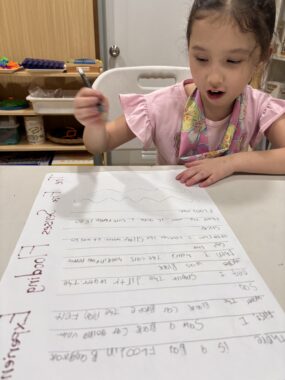
Rylae-Ann completes a writing lesson that her mom designed. (Courtesy of Richard E. Poulin III)
People often see the milestones. They see Rylae-Ann walking, attending school, reading books, and enjoying activities that once seemed impossible.
What they don’t see are the countless hours behind those achievements.
They don’t see Judy preparing lessons, researching strategies, and adapting activities to help Rylae-Ann succeed. They don’t see the conversations we have after bedtime about her progress, challenges, or what we should try next.
They don’t see the mental checklist constantly running in the background. Did we remember her medication? Have we practiced that skill enough? Should we contact her teacher? Are we doing enough?
That last question can be particularly exhausting because there never seems to be a definitive answer. Rare disease parenting doesn’t come with a clock-out button.
Sometimes I create my own chaos
I must admit that much of my workload is self-inflicted. Nobody forced me to become a principal, help establish a nonprofit, or continue writing and advocating. I genuinely enjoy these responsibilities because they give me purpose. However, purpose can quickly become an excuse to keep working.
Over time, I have learned that being productive doesn’t necessarily mean being present. I can answer 50 emails, organize an event, and finish an article, but if I am distracted while sitting beside my family, have I really accomplished what matters most?
That realization has helped me develop better routines. I schedule caregiving responsibilities, make time for self-care, and protect date nights with Judy. Most importantly, I have learned to close my laptop. Admittedly, sometimes it takes a few reminders.
When others notice what I don’t
One interesting thing about my life is that people often praise me for everything I do. But those compliments are sometimes followed by a concerned question: “Are you sure you’re not doing too much?”
My immediate response is usually that I’m fine. And I genuinely believe it. I don’t necessarily feel stressed. I enjoy staying busy and feel energized by meaningful work. However, I’ve learned that just because I don’t recognize stress doesn’t mean others aren’t noticing its effects.
Perhaps I’m talking faster, becoming impatient, or mentally moving to the next task before finishing the current one. Sometimes the people around us recognize our exhaustion before we do.
The difficult part isn’t receiving that feedback. It’s accepting it and doing something about it. I’ve learned that when Judy or someone close to me suggests slowing down, I should listen rather than immediately explain why everything is under control.
After all, insisting you’re not stressed while frantically responding to emails probably isn’t the most convincing argument.
Making room for what matters

From 4 to 7 p.m. is Rylae-Ann and her father’s golden hour during the week that’s set aside for bonding. (Photo by Richard E. Poulin III)
Caregivers are often praised for their strength, resilience, and dedication. Those compliments are appreciated, but they can also create an expectation that we must always keep going. We don’t.
Sometimes being a good caregiver means stepping away from caregiving responsibilities long enough to recharge. It means scheduling a date night, enjoying a hobby, asking for help, or simply spending time together without a checklist.
For me, it also means remembering that Judy and Rylae-Ann don’t need every spare minute of my productivity. They need my attention, affection, and presence.
The invisible workload of rare disease parenting deserves recognition, even when it never appears on a calendar. But perhaps we should also recognize something else: the importance of knowing when enough is enough.
Our children need dedicated caregivers, but they also need happy, healthy parents who have the energy to enjoy life alongside them. And sometimes, the most important thing on my schedule is closing the laptop and leaving the rest of the day beautifully unplanned.
Note: AADC News is strictly a news and information website about the disease. It does not provide medical advice, diagnosis, or treatment. This content is not intended to be a substitute for professional medical advice, diagnosis, or treatment. Always seek the advice of your physician or other qualified health provider with any questions you may have regarding a medical condition. Never disregard professional medical advice or delay in seeking it because of something you have read on this website. The opinions expressed in this column are not those of AADC News or its parent company, Bionews, and are intended to spark discussion about issues pertaining to aromatic l-amino acid decarboxylase deficiency.

Leave a comment
Fill in the required fields to post. Your email address will not be published.