The long road between a promising idea and a child who needs it
AADC gene therapy shows the promise of shared infrastructure
Written by |





In November 2019, my wife, Judy, carried our 18-month-old daughter into National Taiwan University Hospital for an experimental gene therapy.
Rylae-Ann couldn’t hold up her head, sit independently, speak, or control her movements. She experienced dystonia and oculogyric crises in which her eyes rolled upward and became fixed while her body tightened. We had spent months searching for an explanation before she was finally diagnosed with aromatic l-amino acid decarboxylase (AADC) deficiency on Christmas Day in 2018.
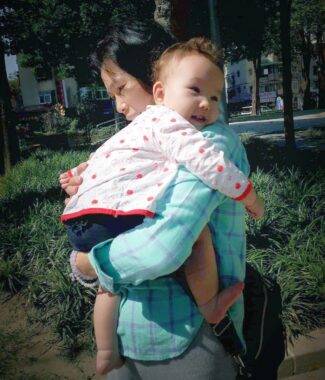
In October 2019, Rylae-Ann met her grandma in Taiwan who helped take care of her during her clinical trial. (Courtesy of Richard E. Poulin III)
Less than a year later, we were in Taiwan, placing our trust in a therapy that was still in a small clinical trial. Today, Rylae-Ann walks, runs, attends school, talks, and argues with her parents. She is particularly skilled at that last milestone.
It is tempting to tell her story as a straight line. Diagnosis, gene therapy, and progress. But there was nothing straight about it.
Before a therapy can reach a child, it must survive years of scientific, regulatory, financial, and logistical uncertainty. Researchers often call the most dangerous stretch the “valley of death.” It is the gap between a promising laboratory discovery and a treatment that can be tested in people and eventually made available to them.
For common diseases, the potential market may persuade companies and investors to accept that risk. For an ultra-rare neurological disorder, the math is much harsher. There may be only dozens of known patients spread across the world. Natural history data may be incomplete. Experienced clinical sites may be separated by oceans. Manufacturing a gene therapy is complicated and expensive. Designing a traditional large, randomized trial may be impossible because the entire identified patient population could fit inside a school bus.
A therapy can make scientific sense and still fail due to a lack of infrastructure. That is why the National Institute of Neurological Disorders and Stroke’s (NINDS) Ultra-Rare Gene-based Therapy Network, known as URGenT, deserves attention.

Sharing infrastructure
NINDS announced updated information about the network in May. Its purpose is to provide funding, resources, and expertise to advance gene-based treatments for ultra-rare neurological diseases from late-stage preclinical development into first-in-human clinical studies.
That description may sound administrative. For families, it is anything but.
Shared infrastructure could mean that each small research team does not have to build an entire therapeutic-development system from scratch. The network can connect investigators with support for study planning, manufacturing, regulatory preparation, and clinical trials. It can help researchers confront recurring problems once, collectively, rather than solving the same problems separately for every disorder. In rare disease, duplication wastes more than money. It wastes time children do not have.
What AADC’s history teaches us
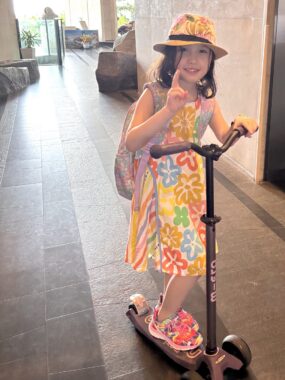
Nearly seven years after the gene therapy that corrected her AADC deficiency, Rylae-Ann Poulin is an active 8-year-old. (Photo by Richard E. Poulin III)
AADC gene therapy shows the promise of shared infrastructure and the persistence required without it.
Trials began in Taiwan in 2010, delivering a functioning copy of the DDC gene into the putamen. When Rylae-Ann entered a trial in 2019, she benefited from years of work by scientists, physicians, participants, and families she would never meet. Her experience became evidence for children who followed.
Europe approved the therapy in 2022. In 2024, the U.S. Food and Drug Administration granted accelerated approval to Kebilidi (eladocagene exuparvovec-tneq), the first U.S.-approved gene therapy for AADC deficiency and the first administered into the brain. The pivotal analysis involved 12 treated children, compared with 44 untreated patients. In ultra-rare disease, those numbers represent years of international effort and much of the known community.
A bridge, not a guarantee
URGenT cannot make every therapy succeed or lower safety standards. It can remove preventable barriers by sharing expertise, strengthening data collection, supporting manufacturing, and helping researchers prepare for clinical trials and regulatory review.
For Rylae-Ann, success is more than a motor score. It is sitting, crawling, walking, running, speaking, attending school, and arguing until her father admits defeat.
We were blessed. We found the diagnosis, researchers, and a trial at the right moment. Families should not have to become researchers, fundraisers, and travel coordinators to reach promising science.
The “valley of death” is also filled with waiting families. A rare disease may affect only a handful of children. That does not make the bridge any less worth building.
Note: AADC News is strictly a news and information website about the disease. It does not provide medical advice, diagnosis, or treatment. This content is not intended to be a substitute for professional medical advice, diagnosis, or treatment. Always seek the advice of your physician or other qualified health provider with any questions you may have regarding a medical condition. Never disregard professional medical advice or delay in seeking it because of something you have read on this website. The opinions expressed in this column are not those of AADC News or its parent company, Bionews, and are intended to spark discussion about issues pertaining to aromatic l-amino acid decarboxylase deficiency.

Leave a comment
Fill in the required fields to post. Your email address will not be published.